
English · Nederlands
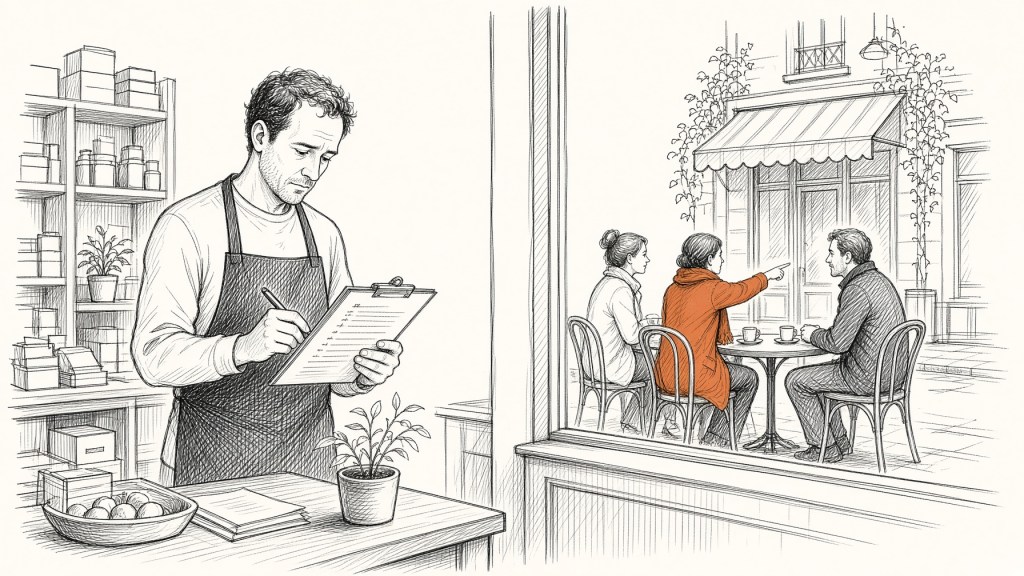
Your best prospects may be researching you in places your analytics will never see. They ask an AI assistant, get an answer, and either show up ready to buy or never show up at all. In 2012 I wrote about the art of location intelligence. Reading it again in 2026, the “location blind spot” I described then looks small next to the one marketers have now.
What I saw then
In February 2012 I argued that mobile campaigns leaned too much on games and coupons and too little on market research. Location gave marketers a new dimension: reach people at a place, at the moment they are there. I listed the tools to research that, from Google’s location targeting in search, to geosocial analytics such as Geotoko, Venuelabs and Momentfeed, to operator and in-store programmes such as O2 More and Shopkick.
The idea that stuck was the location blind spot. Social listening tools searched for brand keywords, so a comment like “this place is a mess”, posted from inside a Burger King, never reached Burger King. The fix was a better tool, one that read location as well as words.
What is the same now
The pattern is the same: the signals that matter most do not match the way you are looking. Only now the gap is much bigger, and it sits at the start of the buying journey.
Pew Research tracked the browsing of 900 US adults in March 2025. When Google showed an AI summary, users clicked a traditional search result in 8% of visits, against 15% when there was no summary. They clicked a link inside the summary in about 1% of visits, and more often ended their browsing session altogether (Pew Research Center). The question was asked and answered. You were not there.
At the same time, traffic from generative AI tools to US retail sites rose 693% year on year in the 2025 holiday season, from what Adobe itself calls a modest base (Adobe). And in March 2026 OpenAI scaled back checkout inside ChatGPT to focus on product discovery and comparison, letting merchants handle the purchase themselves (TechCrunch). Put together: people research inside the assistant and buy somewhere else. The research step, the step marketers have always tried to measure, moves into a conversation you will never see. In B2B that often means the shortlist is made before anyone fills in your form.
What you do see is biased by who made it through. In Winning back brand control I used Abraham Wald’s bullet holes to make that point: your dashboards show the planes that came back.
What is different
In 2012 the blind spot was a tooling problem. You could buy your way out of it, and Momentfeed and others were built to do exactly that. Today’s blind spot is structural. The data does not exist on your side, and no vendor can sell it back to you in full.
The threat also came from a different direction than the industry expected. For years the big worry was the end of third-party cookies. In April 2025 Google decided to keep its current approach in Chrome, leaving the choice to users, and not to roll out a new standalone prompt (Google Privacy Sandbox). The bigger gap came from answers replacing clicks.
And part of the gap is deliberate. Customers who decline tracking are using a right, not creating a bug. The goal is not to engineer around them but to understand demand you cannot track person by person.
What to do about it
- Size the dark share. Compare what you know converted, such as revenue, pipeline or store sales, with what your attribution can explain. The difference is your blind spot. Report it as a number every quarter, and stop pretending the model explains 100%.
- Ask, every time. Add “Where did you first hear about us?” to forms and first sales calls, with “an AI assistant” as an option. Self-reported attribution is imperfect, but it sees what pixels cannot.
- Audit the answers. Run your 20 most important buyer questions through the main assistants every month. Record whether you appear, whether the facts are right and which sources are cited. Then fix those sources.
- Talk to the ones who did not come back. Lost deals, churned customers, trials that never activated. They are the planes that did not return, and they carry the information you are missing.
- Earn first-party data honestly. Offer something worth logging in for: a configurator, a benchmark, a price calculator. Consented data is smaller, but it is real and it is yours.
From “where” to “what are we missing”
In 2012 I predicted that CMOs would start asking not just how and when, but where to reach their audience. In 2026 the better question is what you are not seeing, and who is answering for you while you are not looking.
Sources
- Pew Research Center: Google users are less likely to click on links when an AI summary appears (July 2025)
- Adobe: 2025 holiday shopping season results (January 2026)
- TechCrunch: OpenAI’s plans to make ChatGPT more like Amazon aren’t going so well (March 2026)
- Google: Next steps for Privacy Sandbox and tracking protections in Chrome (April 2025)
- Brayzen: Winning back brand control (2020)
- Brayzen: The art of location intelligence (2012)