
English · Nederlands

Written in 2026 and dated to when the workshop took place. The figures in “What actually happened” are from after 2020.
Supermarkets, platforms and now AI agents sit between brands and their customers. How much control can a brand win back, and where should it invest to get it? Most brands answer that question the way a group of wartime officers once did: they armour their marketing where the data is thickest. The real risk sits in the customers who never show up in the data. A statistician explained why, eighty years ago.
The missing bullet holes
During the Second World War, the US military asked a group of mathematicians a practical question. Bombers came back from missions over Europe full of bullet holes, more in the fuselage than in the engines. Armour is heavy, so where should it go? The officers had an obvious answer: where the holes are.
Abraham Wald, a Hungarian-born statistician in that group, saw it the other way round. The planes that were hit in the engine never came back. The holes in the returning planes showed where a bomber could take damage and survive. The armour, he said, belongs where the bullet holes aren’t.

That idea, now called survivorship bias, is the most useful lens I know for modern marketing. Brands optimise on the customers who click, log in, accept cookies and buy online, because that is where the data is. The customers they are losing, or never reach, leave no trace at all.
A workshop called “How not to annoy your customers”
In 2020 I ran a workshop for the CMOs of the Dutch advertisers’ association, the BVA, with a colleague. It grew out of informal conversations with two of the association’s chairs about what was keeping advertisers awake. Two trends kept coming up.
Brands were taking sides. Unilever’s then head of Foods & Refreshment had told the association’s members that brands need “the skin of an elephant”: taking a position on social issues takes nerve, but it helps a company and its brands enormously. Unilever had bet its portfolio on purpose. Nike had just shown, with its Colin Kaepernick campaign, how much attention and how much risk that brings. Yet the online platforms where these messages had to run were themselves at the centre of fights over privacy, censorship and political manipulation.
Platforms were diluting brands. A supermarket could place its own cheaper label right next to Hellmann’s on its website, optimised with shopper data the brand would never see. Voice assistants went further: no packaging, no shelf, just an algorithm choosing the batteries. Many brands responded by building direct channels and their own customer databases, without knowing how much of Amazon’s technology and skills they would really need to compete.

The question underneath both trends was the same: how much control can a brand realistically regain, and what does it cost?
Both trends were bullet holes we could see. The harder question was where the planes went down: the shopper who never reached the Hellmann’s jar, the listener who never heard the brand name at all.
Three choices, not one roadmap
In the workshop we boiled the options down to three strategic choices. Most brands mix them, but each implies a different investment and a different relationship with the platforms.
| Choice | The belief behind it | What you invest in | The risk |
|---|---|---|---|
| Trust the channel | Your message is for everyone, and you keep the customers you deserve | Brand suitability: making sure your ads appear in the right context | The platform decides who sees you |
| Be the channel | You know your customer and can find more like them yourself | Direct-to-consumer, your own customer data, your own measurement | Expensive, slow, and you need skills you may not have |
| Partner up | You know your customer, but a partner finds them for you | Matching your data with a publisher’s or retailer’s | Your data and your margin end up in someone else’s system |
Each choice sits on a different pillar: consumer trust, a single view of the customer across channels, and control over your media buying. The mistake I saw most often was a brand believing in one choice and budgeting for another.
In Wald’s terms, each choice puts the armour in a different place. Trusting the channel protects the message and its context, where the platform’s data is thick. Being the channel means building your own instruments to see the planes that don’t come back. Partnering up means borrowing someone else’s radar, and accepting that they will always see more than you do.
What actually happened
Six years on, the picture is both calmer and harsher than we expected.
The cookie survived. In 2020 everyone prepared for the end of third-party cookies in Chrome. Google postponed several times, decided in 2024 not to phase them out, confirmed in April 2025 that nothing would change, and retired its Privacy Sandbox replacement in October 2025 for lack of adoption (Engadget). Brands that paused their first-party data work while waiting lost years. Those that built it anyway are better off, cookie or no cookie. Waiting was a way of armouring the returning planes: optimising for the customers already in the data instead of finding the ones who weren’t.
The retailers won the shelf, again. The supermarket that put its own label next to Hellmann’s now sells that position as advertising. Retail media reached about $175 billion worldwide in 2025 and is forecast to overtake linear and connected TV combined in 2026 (WARC via Research Live). Brands pay the platform that dilutes them for access to the customer data it holds. The retailer sees the bullet holes the brand can’t, and charges for the view.
The voice assistant came back as an AI agent. In 2020 we worried about a smart speaker choosing the batteries. Today AI assistants research, compare and increasingly buy on the customer’s behalf. The brand’s packaging, shelf position and ad creative never reach the person at all, only the agent.
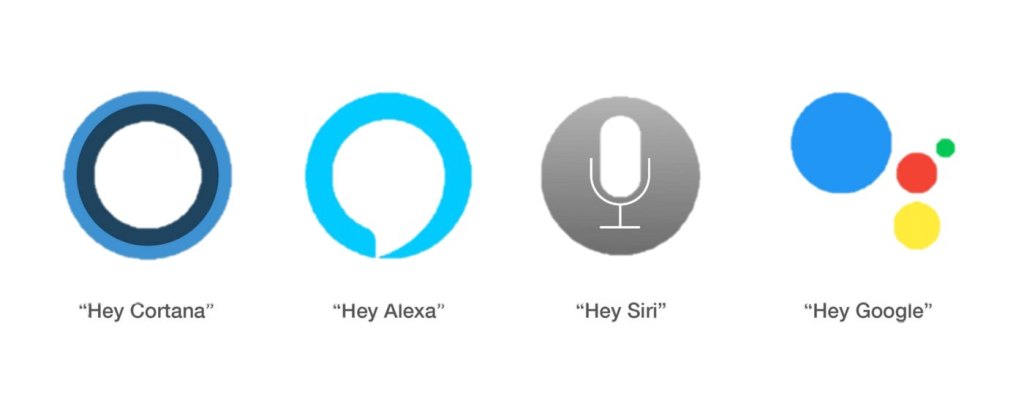
Wald would recognise all three. The customers who matter most are increasingly the ones whose journey you cannot see.
In-housing, honestly
The “be the channel” choice usually means bringing work in-house. That trend kept growing: by 2023, 82% of the members of the US Association of National Advertisers had an in-house agency, up from 42% in 2008 (MediaPost). Wald’s officers knew armour has a price: every kilo of steel costs fuel, range and payload. In-housing is the same. It protects you where you add it, but it is heavy. The advice we gave in 2020 still applies:
- Be realistic about savings. Agency fees don’t disappear; much of the money moves to staff, training, software and equipment.
- Start with the work your team can do easily. Routine, high-volume work that benefits from closeness to the brand, product, legal and customer service is the natural first step. Strategy, brand development and innovation are often better left outside for longer.
- Put marketing technology first, not last. Agencies invested for years in the tools and in the people who run them. Many brands discover that only after they have taken the work in-house.
- Phase it. A media transformation is a series of steps, each one paying for the next, not a single switch.
A lesson for anyone selling to CMOs
Looking back, the workshop itself was the most useful go-to-market lesson in this story. CMOs are flooded with vendor pitches, and most of them end up in the bin. Most of those pitches armour the returning planes: more data and more targeting for the customers a brand already sees. Ours started with the missing holes, the customers lost to over-blocking and to the platforms. Three things made it land:
- The channel was the industry association, not the vendor. The invitation came from the advertisers’ own association, after months of conversations with its leadership. That gave it a credibility no sales email has.
- The format was a frank conversation, not a demo. The workshop was built around questions the CMOs were already asking: who is responsible for brand safety, what over-blocking costs, whether to diversify data and media partners. Technology came in only where it answered one of them.
- The offer lowered the risk to zero. Members could run a free, one-month pilot with no commitment: a review of their keyword block lists and brand safety set-up, a check of whether their media was getting attention, and a test of extending their own customer data into context.
If you sell technology to marketers, an industry association is a channel worth more than most paid campaigns. You earn the right to use it by being useful first.
Where are your missing bullet holes?
Wald’s question is the right one to end on. Your dashboards are full of returning planes: the customers who accept cookies, log in, click and buy on your site. They tell you where you can take damage and survive.
The customers you lose leave no holes. They buy the retailer’s own label, let an AI agent pick for them, or never see your ad because a keyword list blocked it. Before you put more armour where the data is thickest, ask where the data is missing, and why.
Sources
- Engadget: Google has killed Privacy Sandbox (October 2025)
- Research Live: Global retail media ad market set to hit $200bn (WARC data)
- MediaPost: ANA study finds 82% of members report having in-house agencies (May 2023)
- Cameron Moll: the origin of the bullet-hole diagram
- Workshop material, quotes and images: my own 2020 BVA workshop deck.