
English · Nederlands
Editor’s note, October 2026: I wrote this in May 2015, before the Apple Watch was officially on sale in the Netherlands (that came on 17 July, source). Some details have dated: Glances disappeared with watchOS 3, and Apple Pay only arrived in the Netherlands in June 2019 (source). The main prediction, that health data would make the Apple ecosystem even harder to leave, has held up.
In case you missed it: for the first time since Steve Jobs passed away, Apple has entered a new category: Smartwatches. Can the company actually live up to the expectations it has set for itself? Here are a Dutchman’s 2 cents.

It’s the first time I really wanted an Apple product in its first version. I didn’t get the success of the iPod, because I already had the Nike PSA (made by Philips!) with SD memory. The first iPhone was, in my view, a worse version of the HTC Touch HD (running Windows!) and later versions didn’t measure up to the Android phones. And I only got the iPad once I held the thing in my hands, and then I wanted one right away. But by then it was already an iPad 2, because at first I didn’t get the hype and certainly wasn’t planning to suddenly go to a lot of trouble to watch films on a plane.
The Apple Watch, on the other hand, is something I’ve been waiting on for a few years. I deliberately didn’t buy a Pebble or Android Wear because of the cost of switching between platforms. And that is exactly why this product will be just as successful as its predecessors. Let’s go through the different platforms.
Health
 By now I have my own health data in the following platforms: Fitbit (2 yrs), Zeo Sleepmanager (1 yr), Suunto Movescount (3 yrs), Withings (1 yr), MyFitnessPal (1 yr) and RunKeeper/Healthgraph (4 yrs). Apart from the last one, none of these solutions is a) broad enough to measure all data points or b) open enough to aggregate different data points. And it’s all sooooo cumbersome. When I went running with the Suunto, I had to strap a band around my chest for heart rate and a footpod on my shoe for cadence. A newer generation of Garmins, Polars or Suuntos with GPS costs as much as the Apple Watch and does nothing else. The Fitbit was very addictive, but after 2 years the fun wears off once you’ve collected all the badges and your buddies in the top 3 of the leaderboard all turn out to be postmen.
When it comes to sensors for sport and health, the Apple Watch is perfectly fine, which makes the choice pretty simple for many people (myself included): 400 euros for a comparable sports watch, or a little more for a Smartwatch. And then passively collect all your data 14 hours a day, incl. your heart rate 14 times… No Brainer. And RunKeeper works fine with it too.
Take away: put your heart rate monitor on eBay and buy this thing!
Notifications
I deliberately don’t say communication here, because that’s obviously not what this thing is for. People who actually start answering messages with Siri or holding entire phone calls Spock-style aren’t quite right in the head. Digital Touch may well be great fun, but first a few friends need to buy one. But because the notifications from my iPhone come through fine on the Watch, after one week I effectively look at the big screen at least 50% less. And because the temptation on the Watch to quickly check that other app while you’re at it is a lot smaller, I look at information 20-30% less in total. That’s a huge win. Plus: no beeps (!!!).
My phone is now on silent by default and I glance at my wrist every now and then. When the phone rings or a text comes in, I get a lovely subtle “tap” on my wrist. Bril.Li.Ant. That alone would be reason enough to buy one (if you happen to have an iPhone too).
Take away: make friends at home with your new Zen Watch…
Apps


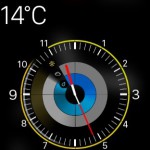
The two cases above are by far the most important. But there were surprises among the Apps too. Like ordering an Uber from your wrist. Checking in for your flight with your Passbook QR, or at your event with MeetUp. Skipping tracks with your iPhone in your pocket. Or picking up and quickly handling a phone call on your bike (!). I expect a lot more here from the various location based services, of which I’ve only tried Scoupy and MyOrder (parking) in the Netherlands; they work just fine. Of course I’ll soon be projecting a PowerPoint through my iPhone and HDMI cable and controlling it from my wrist, just for the swag. Controlling the Apple TV is fun too, but about as useful as that one time you used Shazam, or Layar back in the day: cool demo. I also quickly signed up for a loyalty card with Starwoods Hotels (Sheraton, Westin, among others), because opening your room with your wrist obviously goes straight onto Facebook. WeatherPro gets first prize from me for the design of its Glance. A really beautiful use of forecast sun, rain and cloud data; as far as I’m concerned this can become a Watch Face. Notable disappointments are Foursquare and Twitter. Useless. And there are no fun games (yet), but I suspect people are working hard on that.
Take away: already 3500 apps, at least 4 of which are really good
Content

- MyOrder

- WeatherPro


- De Telegraaf


- NY Times

For people who consume a lot of information, this really isn’t the device. That’s immediately clear from the Apps in this space. If the New York Times doesn’t make sense on it, you obviously can’t expect De Telegraaf to do better. From Flipboard you’d expect more innovation in the interface, but they didn’t pull it off on the tiny screen either. Surprisingly enough, the Bible App works fine at this size. Very short verses suit the medium well. I expect the same from jokes, quotes or Quora answers. Showing a photo on the screen is only useful if you’re a really doting parent, but on the other hand it is handy that you can control your iPhone camera remotely with the Apple Watch (with live preview!). #AppleWatchSelfie!
Take away: what do you expect from a postage stamp?
Conclusion
Even in the Netherlands, the Apple Watch is genuinely useful straight out of the box. The hardware certainly doesn’t feel like a version 1.0, and the first Apps already show plenty of nice possibilities. Really interesting features like Apple Pay and widely accepted location based services aren’t available within our borders yet, but they’ll no doubt arrive soon. As a sports watch it’s a killer gadget, and there are already many surprising use cases you really have to experience to get.
But the main reason for the success of this new branch on the Apple tree will be the same as before: once you leave not just all your music, photos, contacts and Apps with Apple, but your heartbeat too…
…you’ll neeeeeeeeever need to switch again 😉
All the Dutch Apps at a glance*
- MyOrder
- De Telegraaf
- Buienradar


- Buienradar


- Buienalarm


- Buienalarm


- Buienalarm


- Weer in NL


- Amsterdam Rail

- Amsterdam Rail


- Teova


- Teova


- Teova

*did I miss one? Let me know!
What still holds in 2026
- Switching costs are a product feature. The Watch sold because it deepened the iPhone lock-in, not despite it. When you price or position a hardware add-on, ask what it makes harder to leave.
- Passive data beats manual tracking. The Fitbit badges wore off; data collected without effort kept its value. The same goes for AI products today: tools that gather context in the background get used, tools that keep asking for input get dropped.
- Regulators now price in lock-in too. In March 2025 the European Commission required Apple, under the Digital Markets Act, to open iOS features such as notifications to third-party smartwatches (source). If your go-to-market in the EU relies on a closed ecosystem, plan for the door being forced open.